
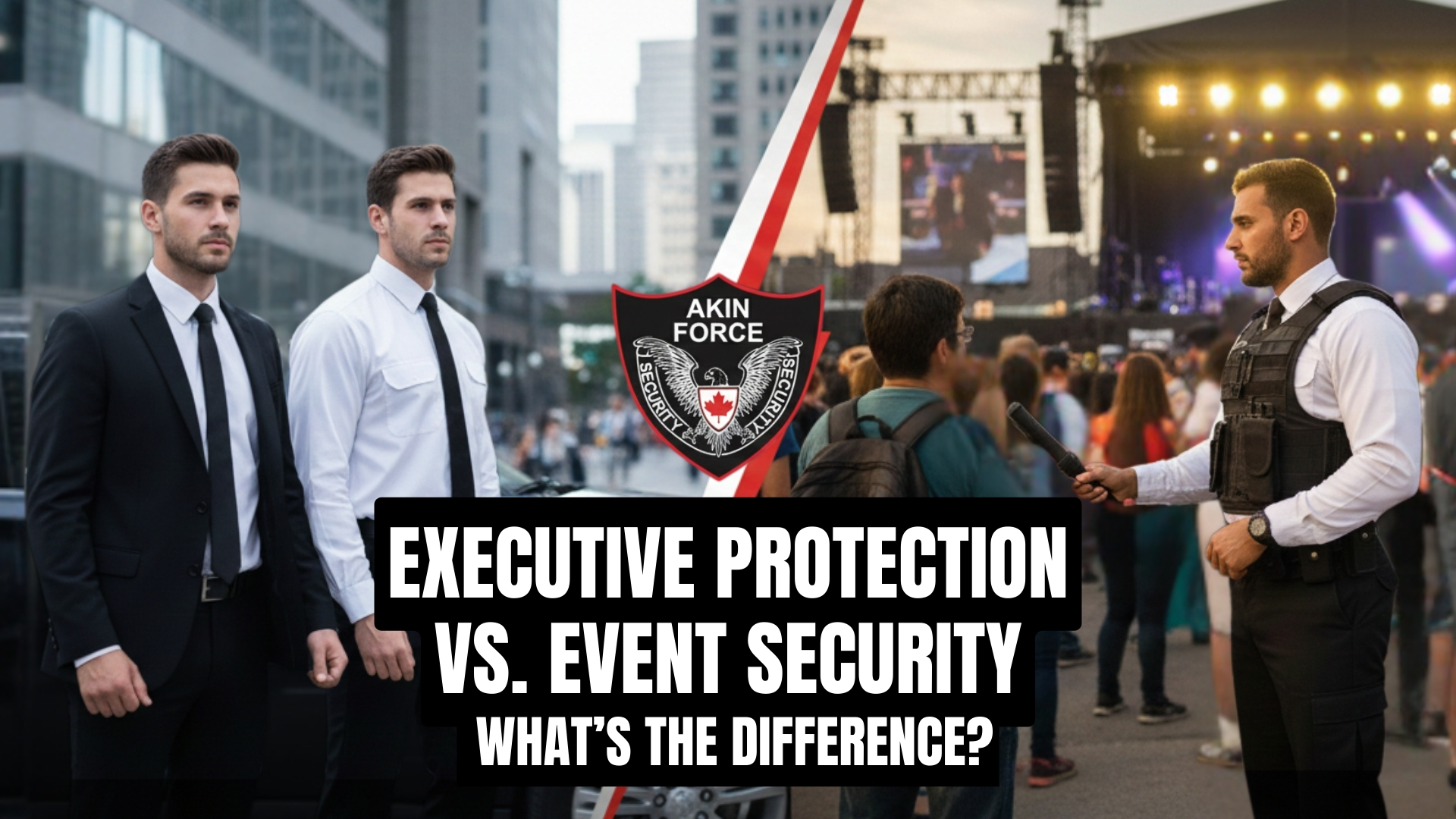
Security needs are not one-size-fits-all. A corporate executive attending a private function has different protection requirements than a crowd attending a public event. Yet many people confuse executive protection with event security.
While both fall under the umbrella of professional security services GTA businesses rely on, they serve distinct purposes.
Understanding the difference helps event organizers, corporations, and property managers choose the right solution. It also ensures that safety strategies are tailored to actual risks rather than assumptions.
A professional security company evaluates each situation carefully before recommending the appropriate level of protection.
What Is Event Security?
Event security focuses on protecting a location, gathering, or occasion.
Its primary goal is to ensure the safety of all attendees, staff, vendors, and property during a specific event. This may include corporate conferences in Toronto, weddings in Mississauga, community festivals in Brampton, or product launches in Vaughan.
Event security teams manage entry points, verify guest credentials, monitor crowd flow, and respond to incidents. They also coordinate emergency procedures and ensure venue policies are enforced.
The focus is broad. Protection is directed toward the overall environment rather than a specific individual.
In many cases, event security works closely with venue management and, where applicable, concierge security teams to ensure building-wide coordination. For larger venues, mobile patrol security may also support perimeter monitoring and parking control.
Event security is structured around maintaining order, preventing disruptions, and ensuring a seamless guest experience.
What Is Executive Protection?
Executive protection, sometimes referred to as close protection, focuses on safeguarding a specific individual or small group.
This service is typically required for corporate leaders, high-profile speakers, public figures, or individuals who may face elevated personal risk. The emphasis is not on crowd management but on personal safety and risk mitigation for that individual.
Executive protection involves detailed planning. Security professionals assess travel routes, venue layouts, and potential vulnerabilities. They may provide discreet escort services, secure private entrances, and maintain close proximity during appearances.
Unlike event security, which remains visible and accessible to guests, executive protection often operates more discreetly. The goal is to prevent threats without drawing unnecessary attention.
A professional security company ensures that executive protection personnel are highly trained in situational awareness, threat assessment, and rapid response.
Key Differences in Focus and Responsibility
The primary difference between executive protection and event security lies in their focus.
Event security protects the event as a whole. It ensures that guests enter safely, crowds remain controlled, and emergencies are managed efficiently.
Executive protection protects a person. It concentrates on the movements, interactions, and personal safety of a specific individual.
For example, at a corporate conference in Toronto, event security may monitor entrances, verify registrations, and manage crowd flow. Meanwhile, an executive protection specialist may escort a keynote speaker from their vehicle to a private waiting area and remain nearby during the presentation.
Both roles contribute to overall safety, but their responsibilities are distinct.
Visibility and Interaction with Guests
Event security personnel are often highly visible. They stand at entrances, guide attendees, and provide assistance when needed. Their presence is meant to reassure guests and deter misconduct.
Executive protection, on the other hand, may operate with lower visibility. While some situations require a clear protective presence, many executives prefer discreet coverage to avoid disrupting the event atmosphere.
This difference in visibility reflects the different objectives. Event security supports the guest experience. Executive protection prioritizes personal safety, sometimes with minimal interaction with the broader audience.
For organizers seeking professional Toronto security services, understanding this distinction ensures expectations align with operational reality.
Planning and Risk Assessment Approaches
Both services involve planning, but the scope differs significantly.
Event security planning centers on crowd size, venue capacity, emergency exits, and logistical coordination. Risk assessments focus on potential disruptions, unauthorized access, and public safety concerns.
Executive protection planning is more individualized. It considers personal threat levels, public exposure, travel schedules, and direct contact with attendees.
In some cases, both services are required simultaneously. For example, a high-profile business leader attending a public gala in Mississauga may need executive protection while the broader event requires structured event security.
A professional security company evaluates these layers carefully to avoid overlap or gaps in coverage.
Response to Emergencies
In the event of an emergency, the response priorities differ.
Event security teams focus on managing the crowd, coordinating evacuation, and maintaining order throughout the venue.
Executive protection personnel prioritize removing the protected individual from danger quickly and safely. Their responsibility is to ensure that the executive is secured before addressing broader concerns.
These roles complement one another when properly coordinated. Clear communication between teams ensures that overall safety is maintained without confusion.
In the Greater Toronto Area, where events range from private board meetings to large public festivals, this coordinated approach is often essential.
Skill Sets and Training
Both executive protection and event security require licensed and trained professionals, but the skill sets differ.
Event security emphasizes crowd management, access control, customer service, and de-escalation techniques. Personnel must be comfortable interacting with guests while maintaining authority.
Executive protection requires advanced situational awareness, risk analysis, and protective positioning skills. Communication must be discreet and efficient. Attention to detail is critical.
Akin Force focuses on delivering customized security solutions. By assessing each situation individually, the company ensures that the right personnel are assigned to the right role.
Choosing between executive protection and event security should never be based solely on budget. It should be based on risk assessment and operational needs.
When Do You Need Event Security?
Event security is appropriate when hosting gatherings of any size where crowd management, access control, and public safety are priorities.
This includes corporate events, private celebrations, public festivals, and promotional launches. Even smaller events benefit from structured oversight to prevent disruptions.
Reliable security services GTA event organizers depend on help ensure that guests feel safe from arrival to departure.
When Do You Need Executive Protection?
Executive protection is appropriate when a specific individual faces elevated risk due to their position, visibility, or public profile.
This may include corporate executives making public appearances, visiting dignitaries, or high-profile speakers attending media-covered events.
In these cases, personal security planning becomes as important as venue safety.
Choosing the Right Security Strategy
The decision between executive protection and event security is not always either-or. In many cases, both services work together.
A professional security company conducts thorough consultations to determine risk levels, event size, and individual exposure. This ensures that security coverage is neither excessive nor insufficient.
Across Toronto, Mississauga, Brampton, and Vaughan, tailored security planning helps organizations protect both people and experiences.
Event security ensures the environment remains safe and organized. Executive protection ensures that specific individuals remain secure and confident.
Understanding the difference allows organizers to allocate resources effectively and maintain professional standards throughout their event.
FAQ
Q1. What is the main difference between executive protection and event security?
Ans. Executive protection focuses on safeguarding a specific individual, while event security protects the overall event and its attendees.
Q2. Can both services be used at the same event?
Ans. Yes, high-profile events often require event security for the venue and executive protection for specific guests.
Q3. Is executive protection only for celebrities?
Ans. No, corporate executives, public officials, and high-profile speakers may also require executive protection.
Q4. Does event security handle VIP access control?
Ans. Event security can manage restricted areas, but executive protection focuses specifically on personal safety.
Q5. Are executive protection officers visible during events?
Ans. Sometimes, but they often operate discreetly depending on the level of risk and client preference.
Q6. How does event security improve guest experience?
Ans. It ensures organized entry, smooth crowd flow, and rapid response to incidents.
Q7. Do both services require licensed professionals?
Ans. Yes, both executive protection and event security must be delivered by licensed and trained security personnel.
Q8. How is risk assessed for executive protection?
Ans. Risk assessments consider public exposure, travel routes, event environment, and potential threat levels.
Q9. Is event security necessary for private corporate meetings?
Ans. Yes, even private events benefit from structured access control and professional oversight.
Q10. How can organizations determine which service they need?
Ans. Consulting with a professional security company allows for a customized evaluation based on event size, risk level, and specific protection needs.