In the Greater Toronto Area, concierge security has evolved into a refined combination of protection, customer service, and operational coordination. At the center of this role lies one defining ability: professional communication. A concierge guard is often the first person residents, tenants, and visitors encounter. Their words, tone, and demeanor influence not only first impressions but ongoing confidence in the building’s management.
Unlike back-of-house security roles that focus primarily on surveillance and patrol, concierge security professionals operate in highly visible positions. Every interaction, from greeting a guest to addressing a building concern, reflects on the property itself. For property managers seeking dependable Toronto security services, communication skills are just as critical as licensing and physical presence.
A professional security company understands that effective communication is not accidental. It is developed through training, experience, and clear performance standards. In concierge security, these skills directly impact safety, satisfaction, and operational efficiency.
Clear and Confident Verbal Communication
Clarity is foundational in concierge security. A guard must speak in a manner that is easy to understand, direct, and respectful. Whether providing directions in a busy Toronto condominium lobby or explaining access policies in a corporate office in Mississauga, clarity prevents confusion and reduces friction.
Confident verbal communication does not mean being forceful. Instead, it reflects composure and certainty. When a concierge guard explains visitor registration procedures or package pickup policies, their tone should demonstrate familiarity with the rules. This reassures residents and visitors that the building operates under consistent standards.
In moments of heightened activity, such as large deliveries or special events, clear communication ensures smooth coordination. For properties that also rely on event security or mobile patrol security, consistent messaging between teams strengthens the overall security strategy.
Active Listening and Attentiveness
Communication is not limited to speaking. Active listening is one of the most valuable skills a concierge guard can possess. In residential buildings across Brampton and Vaughan, residents frequently approach the front desk with questions, concerns, or service requests. Feeling heard is essential to maintaining trust.
Active listening involves maintaining eye contact, acknowledging the speaker, and responding thoughtfully rather than interrupting. When residents explain an issue related to visitor access or building amenities, the guard’s ability to understand the full context prevents misunderstandings.
Attentiveness also plays a protective role. Subtle cues in a person’s tone or behavior may indicate confusion, frustration, or even potential risk. A trained concierge security professional recognizes these signals and responds appropriately, maintaining both hospitality and vigilance.
For property managers relying on comprehensive security services GTA properties require, active listening strengthens the relationship between security personnel and the community they serve.
Professional Tone and Body Language
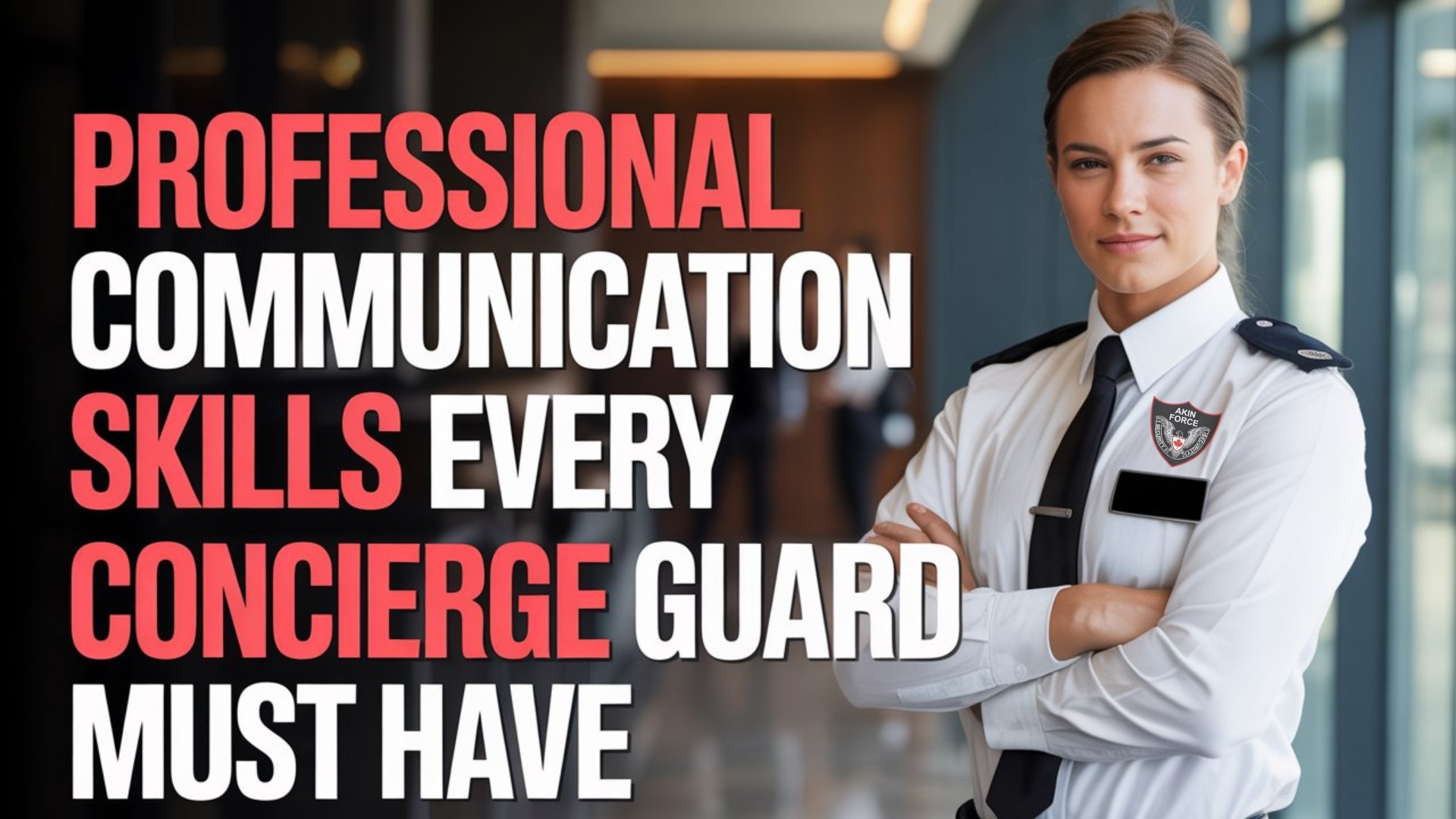
Non-verbal communication often speaks louder than words. Posture, facial expression, and general demeanor all contribute to how a concierge guard is perceived. A professional tone paired with attentive body language signals competence and reliability.
Standing upright, maintaining appropriate eye contact, and keeping a composed expression reinforce authority without intimidation. In high-end residential developments in Toronto, this balance supports the image of a well-managed property. In corporate settings, it aligns with brand expectations of professionalism.
Body language also influences conflict prevention. Open posture and calm gestures can diffuse tension during policy enforcement or minor disputes. A professional security company emphasizes these subtleties during training because they directly affect day-to-day interactions.
Conflict Resolution and De-escalation Skills
Even in well-managed properties, disagreements can arise. A visitor may challenge entry requirements. A resident may express frustration about delivery delays. In such situations, communication skills determine whether the issue escalates or resolves smoothly.
Concierge guards must remain calm under pressure. De-escalation begins with listening, acknowledging concerns, and responding in measured language. Avoiding confrontational phrases and maintaining a steady tone prevents unnecessary tension.
In diverse communities throughout the Greater Toronto Area, sensitivity and respect are especially important. Guards should avoid assumptions and treat every individual fairly. This approach protects both the property’s reputation and the integrity of the security team.
For buildings that integrate concierge security with additional services such as mobile patrol security, consistent de-escalation training ensures that all personnel respond with professionalism.
Cultural Awareness and Inclusivity
The GTA is one of the most diverse regions in Canada. Concierge guards interact daily with individuals from various cultural, linguistic, and professional backgrounds. Cultural awareness is therefore a critical communication skill.
This does not require fluency in multiple languages, though multilingual ability can be beneficial. Rather, it involves respectful behavior, patience, and understanding of different communication styles. A courteous and adaptable approach prevents misunderstandings and promotes inclusivity.
In residential properties, cultural sensitivity enhances community harmony. In commercial environments, it supports global business interactions. A professional security company that prioritizes inclusivity strengthens the overall quality of Toronto security services.
Written Communication and Reporting
Communication in concierge security extends beyond face-to-face interaction. Written reporting is equally important. Guards are responsible for documenting incidents, visitor logs, delivery records, and daily activity reports.
Clear, accurate, and professional writing ensures accountability. Reports must be factual, concise, and free of unnecessary opinion. In the event of an incident, detailed documentation supports property management decisions and, if required, law enforcement follow-up.
For property owners investing in security services GTA wide, reliable reporting provides transparency. It demonstrates that security operations are structured and consistent rather than informal or reactive.
Strong written communication also enhances coordination between concierge guards and other teams, including management and mobile patrol security units assigned to the property.
Adaptability in Different Situations
A concierge guard’s communication style must adapt to various contexts. Greeting a resident in the morning differs from coordinating emergency response procedures. Assisting a delivery driver requires a different tone than welcoming a corporate executive.
Adaptability reflects emotional intelligence. Guards must assess the situation quickly and choose language appropriate to the moment. During emergencies, communication should be direct and efficient. During routine interactions, it should be warm yet professional.
This flexibility supports both safety and service. It allows concierge security to function as a seamless part of the building’s daily operations while remaining prepared for unexpected challenges.
Akin Force emphasizes customized security solutions for properties across Toronto, Mississauga, Brampton, and Vaughan. Adaptable communication is central to delivering that tailored service effectively.
Maintaining Confidentiality and Discretion
Concierge guards often handle sensitive information. This may include access codes, visitor details, tenant movements, or private resident concerns. Professional communication includes knowing what information can be shared and what must remain confidential.
Discretion builds trust. Residents and tenants must feel confident that their privacy is respected. Casual discussion of private matters at the front desk undermines that trust and can damage the property’s reputation.
A professional security company trains its personnel to understand confidentiality boundaries and follow established protocols. In high-profile residential or corporate buildings, this level of discretion is particularly important.
Consistency and Reliability in Communication
Perhaps the most overlooked communication skill is consistency. Residents and tenants value predictable interactions. A concierge guard who communicates policies clearly one day but inconsistently the next creates confusion.
Consistency reinforces authority. When access procedures and visitor guidelines are communicated uniformly, compliance increases. Over time, this stability enhances the perception of professionalism across the property.
For those seeking dependable Toronto security services, reliability in communication is a hallmark of quality service. It demonstrates that security operations are structured and aligned with management expectations.
Akin Force focuses on licensed and trained security professionals who uphold strong customer service standards. By maintaining consistency in communication, concierge guards contribute to both safety and positive community experience.
Communication as the Foundation of Trust
Security is built on trust. Residents trust that their building is protected. Tenants trust that access control procedures are fair and consistent. Visitors trust that they are being treated respectfully.
Professional communication forms the foundation of that trust. It bridges the gap between policy enforcement and hospitality. It transforms security from a visible presence into a valued service.
Across the Greater Toronto Area, properties continue to grow in size and complexity. As expectations rise, the importance of skilled communication in concierge security becomes even more significant. A professional security company that prioritizes these skills ensures that protection and service operate seamlessly together.
FAQs:
Q1. Why are communication skills important for concierge security guards?
Ans. Communication skills ensure that guards can enforce policies clearly, assist residents and visitors effectively, and maintain a professional atmosphere.
Q2. How does active listening improve security operations?
Ans. Active listening helps guards understand concerns accurately, reduce misunderstandings, and identify potential issues before they escalate.
Q3. Can strong communication reduce conflicts in residential buildings?
Ans. Yes, calm and respectful communication often prevents minor disagreements from turning into larger conflicts.
Q4. What role does written communication play in concierge security?
Ans. Written reports document incidents, visitor logs, and daily activities, providing accountability and transparency for property management.
Q5. How does cultural awareness benefit GTA properties?
Ans. Cultural awareness ensures respectful interactions in diverse communities, promoting inclusivity and positive resident experiences.
Q6. Should concierge guards receive formal communication training?
Ans. Yes, structured training enhances verbal, non-verbal, and written communication skills, supporting both safety and customer service standards.
Q7. How does communication support overall security services GTA properties rely on?
Ans. Effective communication ensures coordination between concierge security, mobile patrol security, and management teams, creating a cohesive protection strategy.